Keto vs. Low-Carb: What's the Difference?
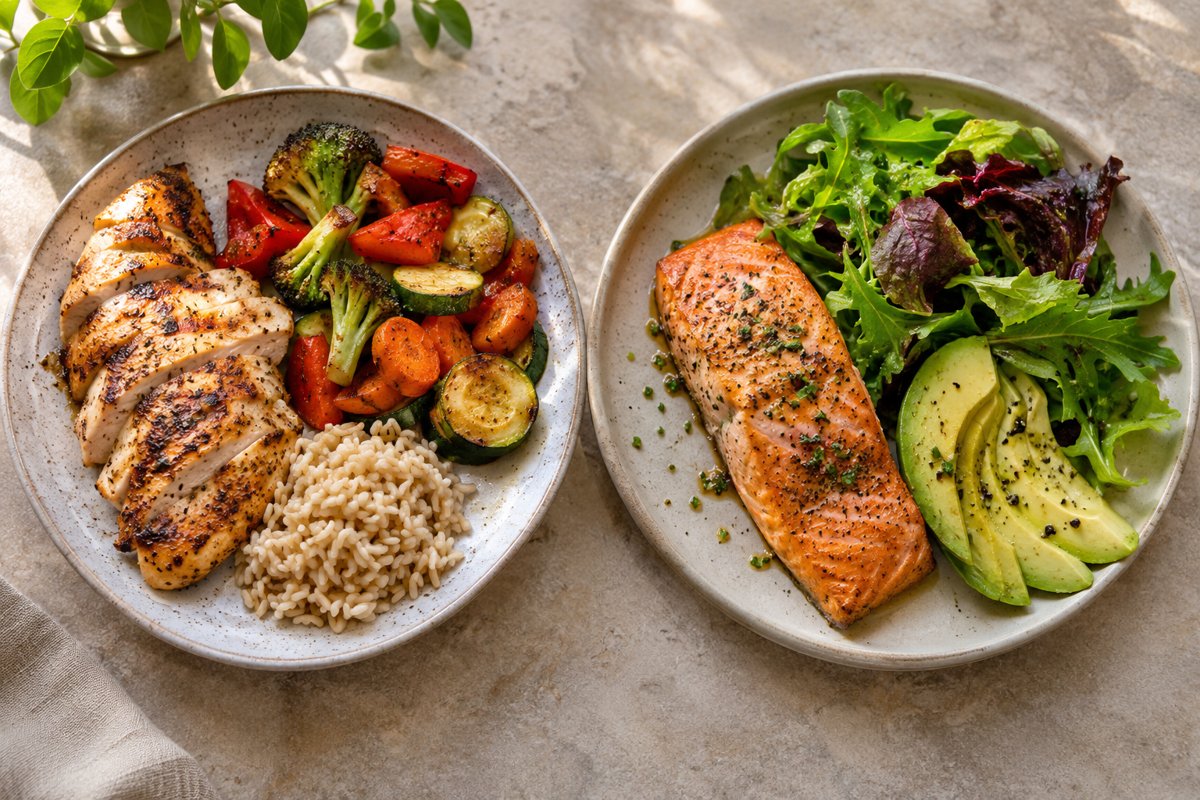
Search for either term and you will find the two used as if they meant the same thing. They do not. Both reduce carbohydrates, but they do it to different degrees and with different goals. Understanding the gap makes it easier to read studies, follow recipes and decide how strict a plan you actually want.
What "low-carb" usually means
Low-carb is an umbrella term. It covers any pattern that cuts carbohydrates below the typical intake of roughly 45 to 65 percent of calories that many dietary guidelines describe. Within that umbrella, researchers use loose categories. A common one, used in the Harvard T.H. Chan School's overview of low-carbohydrate diets and other reviews, looks like this:
| Pattern | Typical carbohydrate intake |
|---|---|
| Moderate carb | 26 to 45 percent of calories (about 130 to 225 g on 2,000 kcal) |
| Low-carb | Under 26 percent of calories (under about 130 g) |
| Very low-carb, or keto | Under 10 percent of calories (about 20 to 50 g) |
Categories vary between papers, so the exact cut-offs should be treated as approximate. What matters is the direction: keto sits at the bottom of the range.
What makes keto different
Keto is defined by its aim, not only by its numbers. The point is to stay in ketosis, where the body produces ketones from fat. That requires carbohydrates to stay very low and protein to stay moderate, because eating a lot of protein can also be converted into glucose and make ketosis harder to maintain.
A general low-carb plan has no such target. A person eating 100 grams of carbohydrate a day is following a low-carb pattern by most definitions, but they are almost certainly not in ketosis.
Side-by-side
- Carbohydrates: keto is typically 20 to 50 g net per day; low-carb often runs 50 to 130 g.
- Protein: keto is moderate; low-carb can be higher, and many versions are openly high-protein.
- Fat: keto relies on fat for most of its calories; low-carb is flexible.
- Fruit and starches: keto leaves out most of them; low-carb often allows berries, legumes, sweet potatoes or small portions of whole grains.
- Tracking: keto usually needs careful logging of grams; low-carb can be followed by simply choosing different foods.
- Social ease: low-carb is easier to follow at restaurants and family tables; keto is harder to improvise.
An example day on each
On a low-carb day, breakfast might be Greek yogurt with berries and nuts. Lunch could be a chicken salad with chickpeas. Dinner could be fish with roasted vegetables and a small portion of brown rice. That adds up to something near 90 to 110 grams of carbohydrate.
On a keto day, the same person might eat eggs with spinach and avocado, a chicken salad dressed with olive oil and no beans, and fish with roasted cauliflower and butter. The total lands closer to 25 to 35 grams.
The ingredients overlap heavily. What changes is the starch, the fruit and the legumes.
Common mix-ups
Three confusions come up often. First, "low-carb" on a package says nothing about how low; a snack bar can carry that label and still contain 15 grams. Second, "keto-friendly" is a marketing phrase and not a standard, so the numbers on the back matter more than the claim on the front. Third, cutting bread does not by itself make a diet low-carb if sweetened drinks, fruit juice and sauces remain. Counting grams for a week, even roughly, shows where the carbohydrates really come from.
Which one suits which purpose
Neither pattern is the right answer for everyone. A few general observations help frame the decision:
- Keto has the longest history as a medical diet, and some clinics supervise it for specific conditions. People who use it outside a clinic usually do so by choice. It is the stricter option and demands the most planning.
- Moderate low-carb is often easier to keep going, because it leaves room for fruit, beans and some grains, which supply fiber and a wider range of nutrients.
- Staying where you are is also a legitimate choice. The Dietary Guidelines for Americans describe several healthy eating patterns that are not low-carb.
If you take medication for diabetes or blood pressure, any reduction in carbohydrate can change how much you need. Speak with a doctor before making the change, not after.
A practical way to compare
If you are unsure which route to try, you can run a simple thought experiment. Write down what you ate yesterday and mark the carbohydrates using a database such as USDA FoodData Central. If the total is 200 grams, a drop to 130 is a modest step. A drop to 30 is a large one. Seeing the actual size of the change often makes the choice clearer than any label.
You can then read about the strict end in our keto guide, build a shopping list with the keto grocery list, or look at the evidence in what the research says.
Takeaway
Low-carb is a range, and keto is the narrow end of it. Both rely on the same basic ingredients, but keto removes more of the starch and fruit and watches protein more closely. The best choice is the one that fits your health, your budget and your daily routine, and that a health professional agrees is safe for you.